index

Not All LED Face Masks Are Created Equal: A Spec-First Comparison

LED face masks can be a brilliant at-home skincare tool, but results depend on the details. Wavelengths, LED density, treatment time, and overall coverage vary widely between devices, and those differences matter.

How to read this article: We’re comparing objective specifications across popular LED masks, then explaining what those specs mean for real-world use. This guide is designed to help you make an informed decision based on measurable features, not hype.

How LED Light Therapy Works (In Plain English)

LED light therapy uses specific wavelengths, measured in nanometers (nm), to support different skin goals. Each band of light penetrates to different depths and is commonly used for different concerns:

  • Red light is commonly used to support collagen and improve the look of texture and fine lines.
  • Near-infrared (NIR) reaches deeper layers and is often used to support skin recovery and firmness.
  • Blue light is commonly used to target acne-prone skin and help reduce the look of congestion.

What Matters Most When Choosing a Mask

1) Wavelengths (nm)

Look for clearly stated wavelengths, not vague “red light” claims.

2) Light density and coverage

More evenly distributed light helps reduce under-treated areas and patchy exposure.

3) Session time and routine fit

Consistency is king. The best device is the one you’ll use regularly.

4) Comfort and fit

A comfortable, well-fitting mask is easier to stick with, which supports results over time.

LED Face Mask Comparison

Below is a spec-first comparison of four popular options. This focuses on measurable features such as wavelengths, LED count, session length, mask material, and regulatory status.

Feature Luméskn Dr Dennis Gross DRx SpectraLite CurrentBody Series 2 Omnilux Contour Face
Total LED lights ✔︎ 288 light chips
(72 bulbs × 4-chip LEDs)
~100 LEDs
(chip density not disclosed)
236 LEDs
(110 red + 110 NIR + 16 deep NIR)
132 LEDs
Multi-chip LED design ✔︎ 4-chip LEDs for higher density
Blue light (acne support) ✔︎ 460 nm ✔︎ ~415 nm
Red light (collagen support) ✔︎ 630 nm ✔︎ ~630 nm ✔︎ 633 nm ✔︎ 633 nm
Near-infrared (NIR) (deeper support) ✔︎ 850 nm ✔︎ 830 nm + 1072 nm ✔︎ 830 nm
Treats acne + ageing ✔︎ Blue + Red + NIR ✔︎ Red or Blue modes Anti-ageing focused Anti-ageing focused
Session length ✔︎ Adjustable 5–20 min
(user-controlled)
Fixed 3 min Fixed 10 min Fixed 10 min
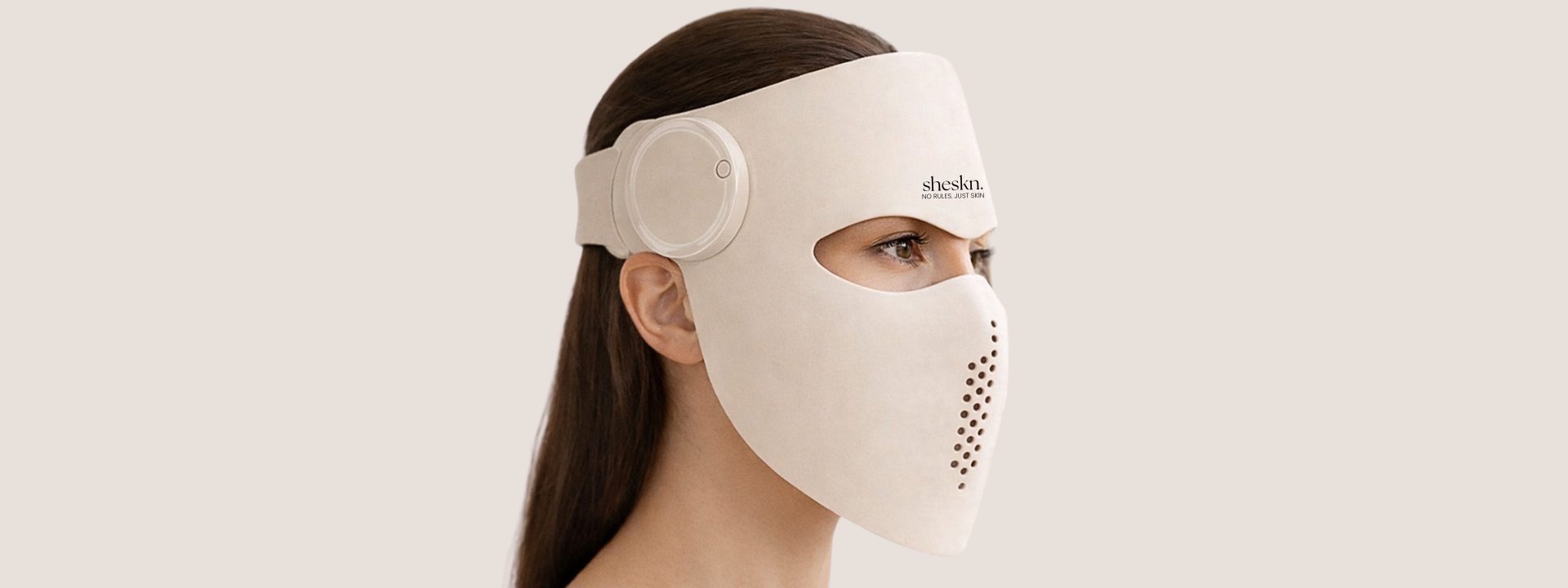
Mask material ✔︎ Flexible silicone Rigid shell ✔︎ Flexible silicone ✔︎ Flexible silicone
Regulatory status ✔︎ TGA + FDA cleared ✔︎ FDA cleared ✔︎ FDA cleared ✔︎ FDA cleared

Specifications are based on publicly available manufacturer information at the time of publication. Product features and recommended usage may vary by individual and may be updated by brands over time.

So, Which LED Mask Should You Choose?

If you want the fastest routine: Dr Dennis Gross is known for quick preset sessions (3 minutes), which can suit people who love a set-and-forget daily habit.

If you are focused purely on anti-ageing: CurrentBody Series 2 and Omnilux Contour focus on red + near-infrared programs designed around firmness and the look of fine lines.

If you want one device for acne plus ageing, with a custom routine: Luméskn combines blue (460 nm), red (630 nm) and near-infrared (850 nm), with 288 light chips and adjustable 5–20 minute sessions so the routine can flex with your skin.

A Simple Routine Beats a Perfect Routine

LED results come from consistency. Choose a mask you will actually use, and give it a few weeks of regular sessions. If you want a flexible program that can support acne-prone skin and visible ageing concerns in one device, Luméskn is built for that.

Quick FAQs

How often should I use an LED mask?

Most routines sit around 3–5 times per week, but always follow your device guidance and adjust to your skin’s tolerance.

When will I see results?

Many people notice changes over several weeks with consistent use. Individual results vary based on skin, routine, and consistency.

Leave a comment

Your email address will not be published. Required fields are marked *

Please note, comments must be approved before they are published

FAQ

Yes — the Luméskn LED Mask is TGA approved, meaning it meets Australian safety, quality and performance standards for at-home LED light therapy.

• 460nm Blue Light: Targets acne bacteria and reduces breakouts.
• 630nm Red Light: Boosts collagen, reduces fine lines and brightens dull skin.
• 850nm Near-Infrared: Supports deep repair, healing and elasticity.

Most users notice a glow within 1–2 weeks, with improvements in texture, breakouts and
fine lines becoming more visible after 4–6 weeks of consistent use.


Yes. Luméskn is made from premium food-grade silicone, making it hypoallergenic and
suitable even for people who normally react to standard silicone.

LED is generally safe after many cosmetic procedures and can support healing —
however, always follow your clinician’s advice if you’ve recently had injectables, peels
or laser.

No — you should not apply skincare under the mask.
For best results, use LED on clean, dry skin, then apply your serums and moisturiser
after your treatment to boost absorption.

No — the mask is designed with flexible, lightweight silicone to fit comfortably against the face for hands-free use.